On grief, faith, and healing in blue houses
In my 33 years on Earth, I have experienced truth, reconciliation, and life-altering goodness through my relationships with the people around me and the things they create through inspiration, action, and devotion.
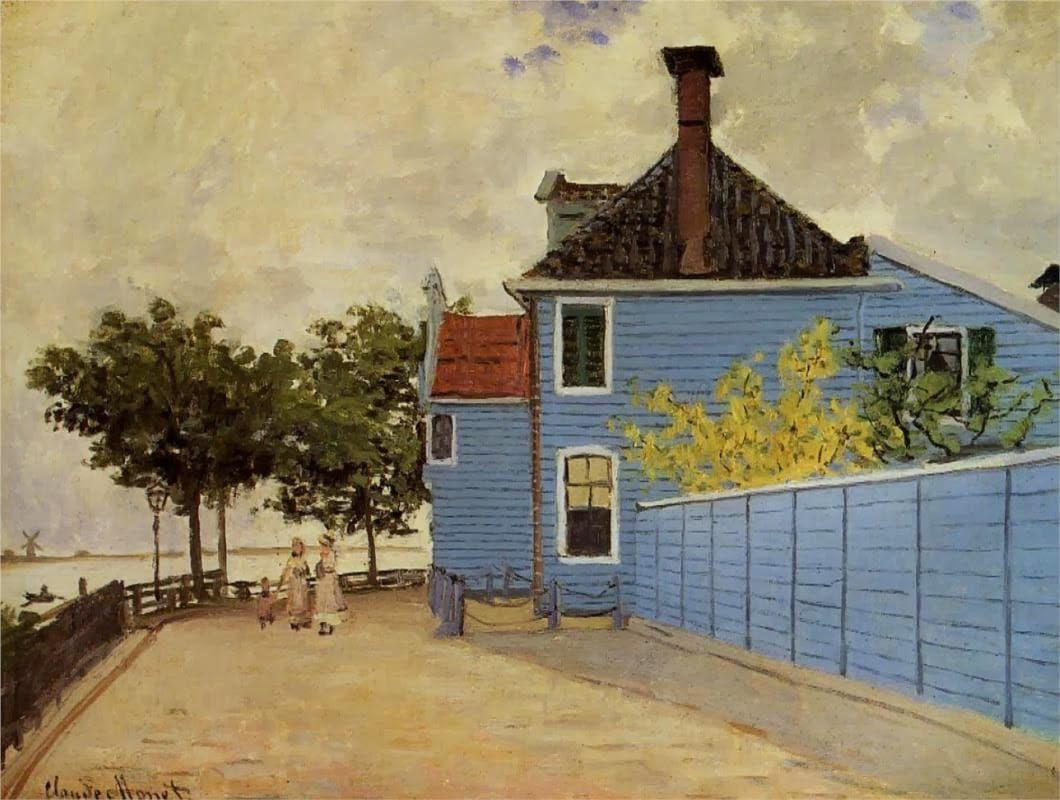
My greatest teachers live in blue houses.
My father’s mother, Diana, in hers, taught me toughness and flavor-filled love. I spent countless car rides with her, when she'd drive us back from leading a meeting of the Catholic Daughters or Garden Club, stopping under the endless blue south Louisiana sky near a marshland waterway, collecting trash with bare hands, knowing it could choke the sunbathing turtles and lurking alligators in our shared home, leech chemicals into the ground. Disrespect of our natural world enraged her, a farmer’s daughter and wife and 7th-generation Cajun-Creole, because she knew nothing but life through reliance on the land, that caring for the Earth's resources was not optional for our survival.
On my favorite afternoons, in her house right next to mine, she’d teach me how to bake fig tarts and lemon meringue pie, my little arms sore from the alchemy, learning through the deep ache the sweet magic I could make for others with my own hands. We’d eat our creations over games of checkers and Go Fish, Shirley Temple movies or PBS playing on her small television. Sometimes, shrimpers with their trucks would drive down our gravel road, selling their fresh catches of the day door-to-door, and I’d walk into her house after school to the mouth-watering smell of the Gulf of Mexico's spoils, freshly battered and fried and ready to eat.
Diana's shadows, too, were an education: the family secrets she kept, the violence she justified, the blame and judgment she shifted to the innocent, to the marginalized, maintaining through the pain of her lifetime’s inescapable reality that this world is thankless, men are men, and this is what we all must accept, what women must do to survive.
My mother’s mother, Mary, a gentler teacher who had been widowed in her thirties and never remarried, made her own classroom from the rental homes she offered as cool, still emotional sanctuaries from the chaos of my own. She filled my heart with classic sitcoms, cheeseburgers from local restaurants, and Hubig’s Pies bought from the corner store in the ultra-rural, ultra-poor village where she lived. Some weekends, I’d learn from her blue-veined hands clasping mine, her feet on fire from childhood neglect and a long day in the service industry, but still twirling me around the dance floor to Cajun songs about joy and sorrow, her happiness as palpable as her fatigue.
Her criticism and anger, too, offered its lessons: sometimes cruel, directed at her own body and appearance (never, ever mine), and toward those she believed were neglecting their sacred work, because all work could be sacred, the movement and service so often the cure. The hardest parts of her curriculum came when I was older, when we’d share evenings of raucous laughter — then, hours later, I'd hear her waterfall of tears, the sound rushing through a shut bedroom door. In high school, I found a handwritten prayer to herself on ruled paper — that she would have left him, the father of her children, if his early death hadn't spared her the choice — tucked inside a book, the scar she never wanted me to see until the end, when she saw it happening to me, too, long before I could see it myself. Mary's final gift to me was to speak aloud, finally, some of what he had done to her, hoping to spare me her fate so that I might one day find for myself what she never had.

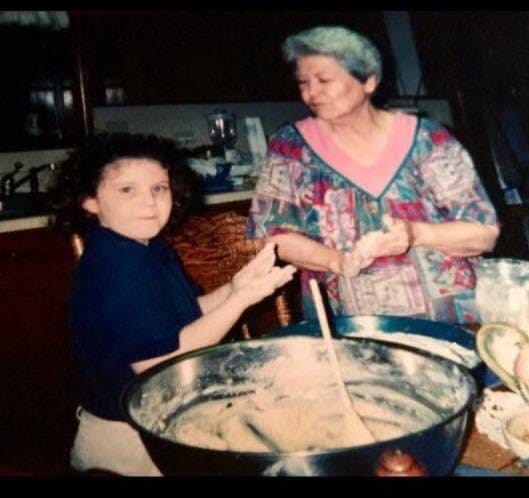
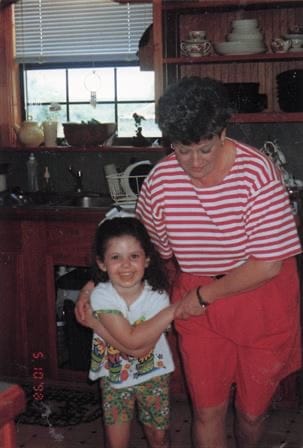
Making dough for fig tarts after school with Mawmaw Diana and dancing in the kitchen with Grandma Mary on Mother's Day
Both of them, before: ever-active hands — working in the garden, clanging pots in the kitchen, organizing sales racks, hovering over the newspaper crossword — always serving others, eyes shut, signs of the cross, rosary beads between their palms, praying to God and imploring his and their Holy Mother, shrouded in her glorious blue, when they felt all of humanity had failed them.
Both of them, through my grief: passing along gifts of sobriety, surrender, intuition, and wisdom. Their legacy of wordless insight lives in me now through feeling, an understanding that comes only through tears I fear might drown me, just before I realize I am gently floating toward the truth.
Both of them, now: always with me, forever saving me in the ways they could. I hear them when Loretta Lynn sings of the simple, patient, moonlit love of a Blue Kentucky Girl, knowing Mary prayed daily that I’d find nothing less, that Diana feared aloud to me that I never would. I see them when I look at the magnolia flower tattooed on my shoulder and the blue hydrangea near the crook of my arm, hand a struggling stranger a $5 bill and a kind word I can afford to give, breathe in the nutty smell of a roux as it turns from peanut butter to dark chocolate on my stovetop. I feel them in the warmth that starts in my chest and pours out in my grief and joy and knowing, with certainty, that the ones who love us best never leave, so long as we stop to remember them.
Brilliant and ignorant, humble and proud, kind and vicious — always whole, always human, always admitting in their own way that they could never know anything, really, for certain. Who does?
Not the charismatic Fathers of institutions large and small, religious and secular and familial — who prey on the meek caught in their confessionals, build spiked walls around their own flawed humanity, shroud themselves in anger and the false promise of power because it's easier to carry than sorrow. Nor do the safe, gentle ones whose mere existence heals me, the honest ones who admit they are only men, too, and let themselves be humbled, submitting themselves to the authority of the unknown and choosing righteous goodness wherever they feel called to serve others.
Neither do the holiest of women: the Sisters who pledge themselves to divine surrender, who ride the wind in search of meaning and toward lives of service, education, and healing. Some harden and abuse, create more agony by denying their own, believe pride and control will save them. As a child, I was inspired and safely held by the women who lived by witnessing the beauty in those who dared to sing their blues and the Gospel with equal fervor, who couldn’t choose to hide our imperfections behind money or power. I most loved those holy women who truly loved us — the people whose contradictions and hurt were perpetually visible.
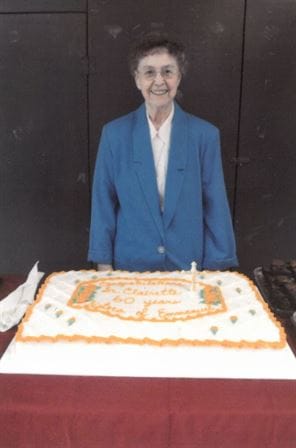
My first religion teacher, Sister Clairette Grondin, our small town's “little bright one," was a tiny, joyful woman who carried mountains of other people's hurt. She loved and laughed with a hurricane’s force, saving generations of my family in more ways than one. Sister Clairette told me at my smallest, my most genuine and vulnerable, that my innate curiosity is a precious gift. When my time with her ended, just before I received my first Holy Communion, she gave me a small, hand-crocheted award — I could call myself her “Christian of the Year,” she told me, for all the questions I asked in her classroom. “I gave you this because Jesus loves when we ask questions that serve him,” she said. She could see, I now realize, that I didn't mean to be defiant or rebellious — I wanted to understand, to know as much as I could, because I cared. She must have known that I might never hear that message elsewhere for a long time.
As I got older and struggled, Diana, who almost never missed a Sunday Mass, would often say to me, in deep frustration at my angst, that I was destined to be a lawyer. “Erin Elizabeth, I think you would argue with Jesus Christ himself,” she’d spit at me, clearly worried I was a lost, prideful cause, my soul at risk of eternal damnation. Mary was less openly devout then and said nothing, just prayed to herself, and kept loving me the way she always did.
When I chose to leave the church at 13, Sister Clairette was still around, her mind intact before the Alzheimer’s took it away. My catechism teacher that year — a local business owner who said he loved Jesus but spoke cruelly of the marginalized and preached wall-building over table-flipping — had turned me away from organized religion. But Sister Clairette, in all her simple wisdom, never tried to shame or convince me to return. She let me go, offering a smile whenever she saw me, trusting that I could find my way no matter where life might take me.
This summer, a few days after my birthday, my union colleagues and I received a last-minute invitation to meet with representatives from the Vatican to speak about the grassroots organizing work we've been part of in Pittsburgh. I was the only person among us who was not already busy that day, so it had to be me. It was quite the unexpected party, much as Tolkien described. I chuckled, too, wondering what Diana would have said about this turn of events: her stubborn, now-tattooed, opinionated granddaughter, the one who had rejected Catholicism two decades ago, suddenly had a direct line to the Pope? Life is truly stranger than fiction.
In that meeting, I felt unsure of myself, worried I would come across as self-centered if I let my own heavy trauma steer my words. In the end, after speaking about the work itself, what I was there to do, I mentioned that during my lowest moments over the last few years, I had thought mostly of my grandmothers and how they both survived lifetimes of pain. All of it, I remembered aloud, had been wrought by people, governments, and churches that suppressed their culture and livelihoods, brutally extracted resources from the land on which they lived and gave nothing back, beat the independence and French language out of their bodies. I told our gathered interfaith activist group that in my own dark days, ones I worried I could never escape, I remembered that my grandmothers both revered the teachings of St. Thérèse of Lisieux, who herself faced disbelieving, power-hungry, abusive church leaders, and her Little Way — a simple reminder that when all else fails, a small act done with great love can save us.
For years after leaving Louisiana, Sister Clairette sat buried in my memory, underneath my dreams of escape, financial security, and a home that might never hurt me. When I woke up the next morning after my meeting with the Vatican group, she was sitting there, right at the top of my mind. She had emerged alongside a wellspring of tears and love as I read her obituary and suddenly recalled how her words had held me, and still do. I called my mother, asking her to tell me her own stories about the small woman with a giant's heart.
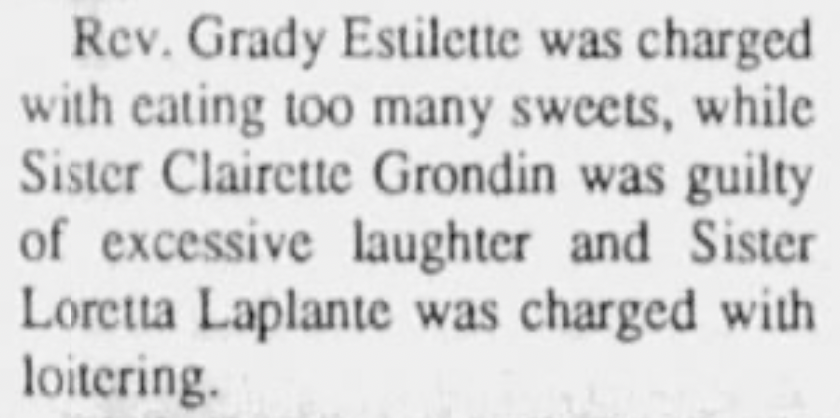
Sister Clairette, she told me, had saved my grandfather before his death, and my grandmother after it. She had visited my grandfather regularly as he was dying of incurable colon cancer, praying with him, reading the Bible to this strapping, charismatic, self-educated bookworm of a man as his body withered away. She led him to realize what he had never been able to understand for himself: that his drinking, his own buried pain and pride, had led him to physically and emotionally abuse my grandmother. He repented and apologized, found peace before he left this world and his family at only 43. Once his last breath had left him, Sister Clairette took my grandmother under her wings, offering her a job at the church rectory, working daily among the nuns, so she could have enough money to care for her three children still at home.
I’ve never disagreed with the simplest truths found in what Jesus taught; I just didn’t learn to digest them in church pews. I came to understand these truths, ones present across thousands of years of human wisdom and other cultural and spiritual practices, in my own way. Ultimately, I found them through art, in the process of studying social work — which tells us that every human has innate worth and the capacity for positive change, that we owe the meek and the suffering nothing but love in this life, and that healing doesn't look the same for everyone — and on my own labor union’s picket lines, where I met people of all faiths and lack thereof, races, and cultures who practiced far more than they preached, centering love in all they do. Perhaps most vitally, I found my way back home when I finally surrendered to my own truth: that I was hurt, and I had to face that hurt — in a way that felt comfortable and safe — before I could find peace and love for myself and extend it to the people in my life when they need it.
I first stumbled upon my own understanding of faith through literature and music. When my mother was pregnant with me, she read The Hobbit and The Little Prince aloud to her swollen belly, while my father played Cajun songs on his fiddle, hoping the words and melodies might sink into the womb holding me, stay permanently etched into each of my cells. I was not parented by them as well as I should have been, trauma and poverty stifling their growth and mine, but in these choices, they overwhelmingly succeeded.
I carry those literary messages and sounds with me wherever I go, no matter how hard I've tried to toss them out, convinced they weighed me down because they were wrapped up in pain, too. Still, they are mine. What is rooted firmly within us, if weeds are pulled and the ground is watered, can never die.
As a small child, I breathed in the simple, universal lessons taught during the golden age of children's media, through the tireless, loving work of spiritual advocates like Fred Rogers and Jim Henson. To this day, I can hear the truth in Ernie's rendition of "I Don't Want to Live on the Moon" from Sesame Street — adventures are grand, the stars and sea depths both glorious mysteries, but home is best, however flawed, because it is ours. Sometimes I cannot believe the profound wisdom that flows from a goofy green felted puppet playing a banjo in a swamp when Kermit the Frog sings "Rainbow Connection" at the opening of The Muppet Movie. I feel shrouded in mystery and love when I hear these lines:
Who said that every wish would be heard and answered
When wished on the morning star?
Somebody thought of that, and someone believed it
Look what it's done so far
In my 33 years on Earth, I have experienced truth, reconciliation, and life-altering goodness through my relationships with the people around me and the things they create through inspiration, action, and devotion. I came to believe in the higher power of the profound, ceaseless love that persists among us by drinking it up in the everyday shape of my own independent life. I finally felt that strength through my own surrender to the unknown, in personal sacrifice I could have avoided, and by learning, and often failing, to better love myself as The Golden Rule teaches us we should love our neighbors — even the most downtrodden and seemingly damned — as Christians are taught to love Christ, as the Greeks believed and practiced, before their own downfall, that they should treat the stranger as if they might be a god in disguise.
Throughout my life, I have wept at church choir hymns and paintings on cathedral ceilings, astonished by the divine beauty crafted for our world through human minds and hands. I have felt an avalanche of tears in silent, devoted prayer at my childhood bedside, distraught that I could not save everyone in the world, and during Mass and church funerals for family members and friends’ parents, through biblical affirmations of life’s greatest joys and deepest sorrows. As an adult, I have cried with deep understanding and comfort when reading Bible passages like The Parable of the Sower and Song of Songs, feeling deep in my anxious heart the truths they carry.
But I have done much the same under the dizzyingly blue New Hampshire sky as I stumbled along the Franconia Ridge in Wôbanadenok, what the Abenaki people of North America call the place of the Dawnland Mountains, to climb the summit now known by most adventurers as Mount Lafayette. The people who first populated this area hold the granite peaks here in great reverence, considering them to be a sacred boundary between the world of humanity and the region of the spirits that continue to guide them through life. Hesitant to hike this route in the first place, exhausted and lacking faith in my own body, I feared we would not make it back down before dark, then collapsed into a mixture of thankful tears and stunned laughter when we finally did. When my two Louisiana-born friends and I left the last thicket of trees, we admitted aloud to one another that we had seen flashes of light around us when we finally reached the ground, just before we heard the rushing cars that signaled we were close to our own. The lights we saw were blue and looked like woodland creatures. Had we each, independently and drug-free, hallucinated the same things in our exhaustion and fear? Possibly. I will probably never know for sure.

A few months after that terrifying but soul-filling New England trip with beloved friends, when I pondered whether journalism was actually for me, I would find the job that took me as far away from home as I'd ever been and closer to my own higher truth and understanding of my role in this world. Since then, in the years when uprisings, social chaos, and uncertainty became inescapable for everyone paying attention — no matter our race, gender, political opinions, or class position — I have had my senses flooded by movements for social justice of all kinds, feeling the pain over lives senselessly lost to poverty, bigotry, and ignorance, and righteous anger against unchecked, violent power, finding strength in knowing that we are all just one small part of this big, wide world, each with our own parts to play.
I still sob when I recall the quiet grace I felt as a toddler watching Mister Rogers’ Neighborhood, long before life's twists had brought me to live in its creator's real-life neighborhood. My first pilgrimage when I arrived in Pittsburgh was to the Heinz History Center, which now holds King Friday's big blue castle, the site of lessons taught in Fred Rogers' Neighborhood of Make Believe. I had moved to this city on short notice, desperately seeking a more suitable job for myself, and never realized until the day I arrived that one of my favorite childhood TV shows had been created in my new chosen home. Still, I walked there from my temporary lodgings, marveling at the landscape as I trekked across the Rachel Carson Bridge over the Allegheny River, my two feet leading me there without a second thought. "I have got to see this," I can remember thinking, buzzing with excitement and not yet understanding why.
When I saw Fred's creations, the blue sanctuary he'd created for his own sensitive childhood imagination and the TV ministry that housed my generation's most beloved puppet teachers, right in front of me, I was shocked by my tears. I had never realized how much this man's work held me when I most needed it. Those same tears fell thick and hot a few years later when a hateful act rocked the city, Jewish worshippers murdered in their own holy space because they dared to welcome strangers into our shared home. I was grateful to find, through those tears, my own small way to be of service to them, playing my part among many others to tell the truth of that day with as much care as I could muster. I can only hope, never know for certain, that I did what The Rev. Fred Rogers would have wanted me to do.
I think of this every time I pass by the statue of him that overlooks the confluence of Pittsburgh's three rivers, just a short walk from my own former workplace. Mr. Rogers' gentle voice now forever sings for Pittsburgh, over the water and through the din of drunken sports revelers.
But it's you I like
Every part of you
Your skin, your eyes, your feelings
Whether old or new
I hope that you'll remember
Even when you're feeling blue
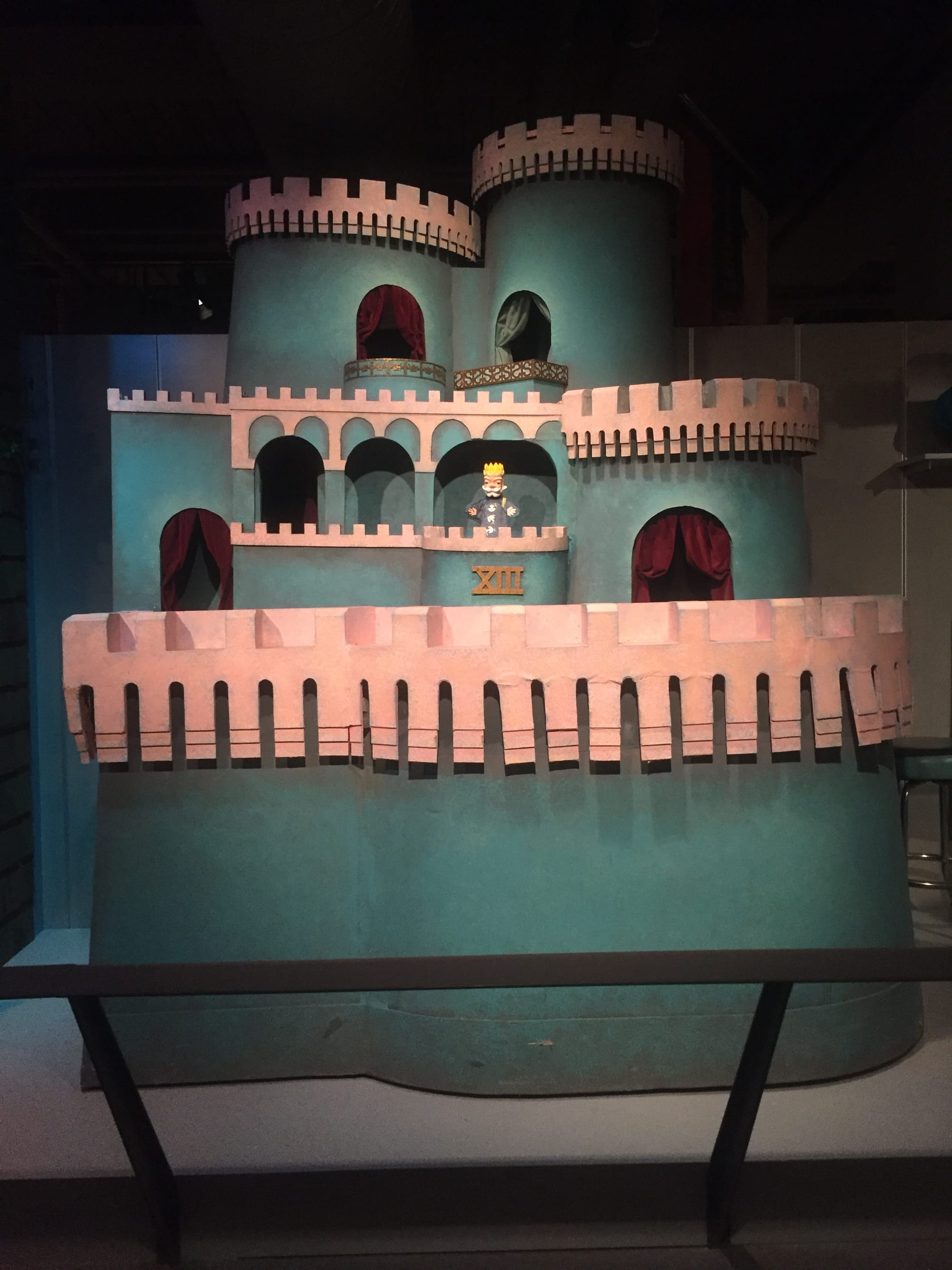
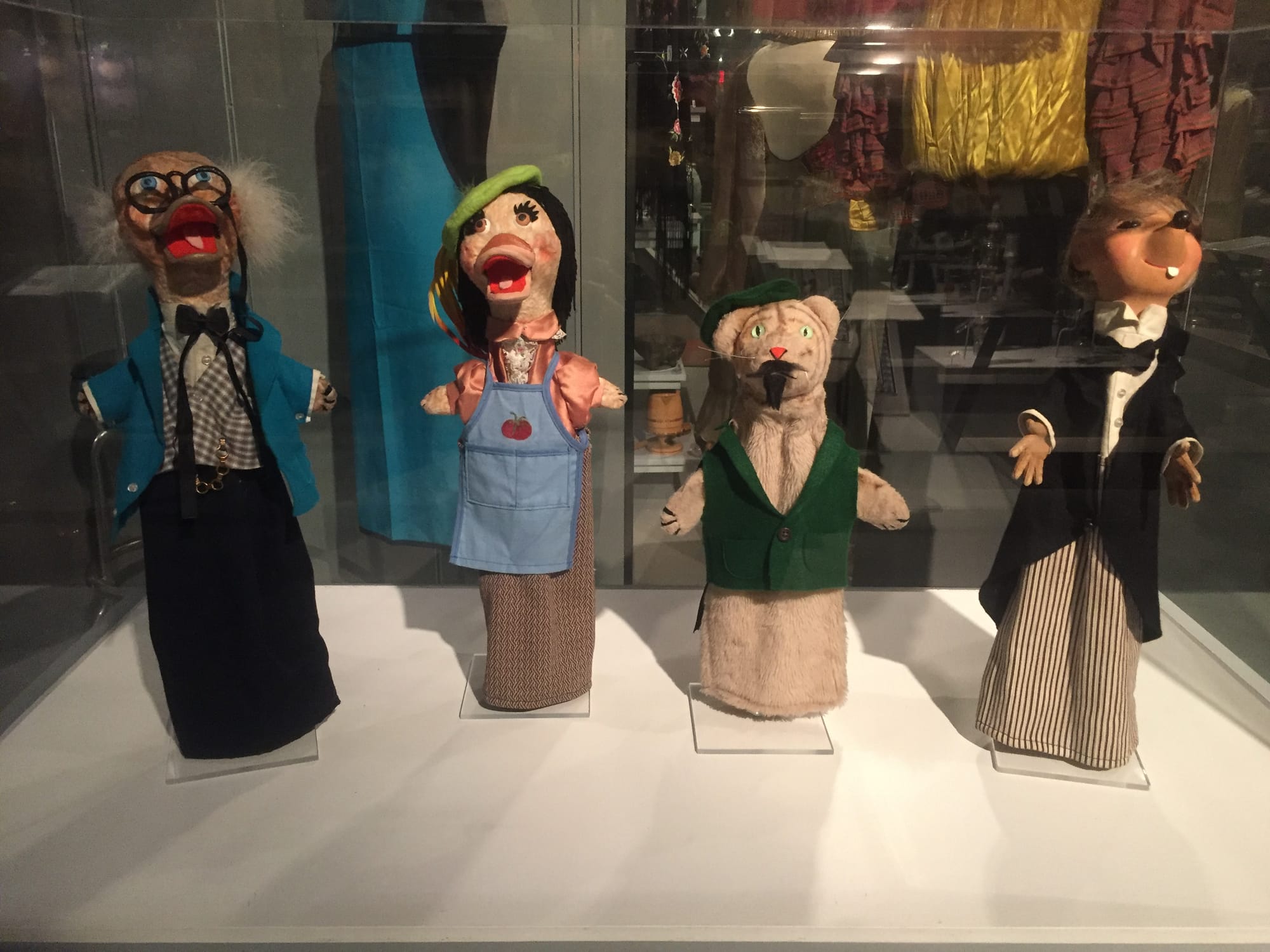
King Friday's Castle and Fred Rogers' puppets, both crafted for his Neighborhood of Make Believe, at Pittsburgh's Heinz History Center in October 2016
From the start of my life, I have found myself in situations I should, according to popular belief and sometimes science, never have survived. My birth itself was traumatic and uncertain, my mother and I both rescued from the edge of death, a situation that I have since learned can impact a baby's DNA for life. I have found myself caught by the grace of happenstance, by a helping hand that comes just before I worry nothing will save me, countless times, in such strange combinations and so frequently that I think people must assume I am lying or exaggerating. When this sort of thing occurs so often, over and over again and in such different scenarios, you cannot help but move through life in a perpetual state of wonder.
Through everything and everywhere — in churches, among Earth's natural glory, and in the creations of its people — these acts both great and small from my lifetime of guardians, all done with great love, are reminders that we are so insignificant, so blessed to experience this life in all its complexity. Even at my lowest, and through the lack, loneliness, and despair of my early life, I have never stopped feeling lucky beyond measure to keep taking the tests life hands to me.
Because what is life on Earth but a string of ordinary days spent in this big, beautiful blue house we share? Some utterly perfect, full of love and bliss; others so agonizing we cannot see any light through our tears. Most, both. I must consider and love it all. There is no other way.
A favorite coffee mug, that vessel of precious energy, broken beyond repair when we have never been more tired — another on the kitchen shelf, long forgotten, waiting to be dusted off and loved just the same. A baby’s gummy grin, curious eyes peering from their mother’s shoulder on a humid summer bus ride, a light to carry into the stifling, gold-gilded house I thought would finally save me — to another night working for dishonest, insecure men who choose you, insist you are safe here, then make clear how much they wish they could sink their teeth into you, how they hate that they can't ignore how you outshine them without trying. The cool breeze on a clear-skied autumn day in Pennsylvania, a skin-prickling bite in the air that reminds us we are flesh and blood, scatters the painted leaves to the ground — a sign that today is beautiful, but soon the sun will need to hide again.
Everywhere, inescapably: the lesson that to endure is a blessing, too, and one that will always lead us back home.
What a gift — to forever see the sacred in the flawed and the common, a reminder that we are always guaranteed a saving grace.